Elena Neumann · 16 September 2026
Drought-Resistant Crop Experiments Take Root Among Regional Growers
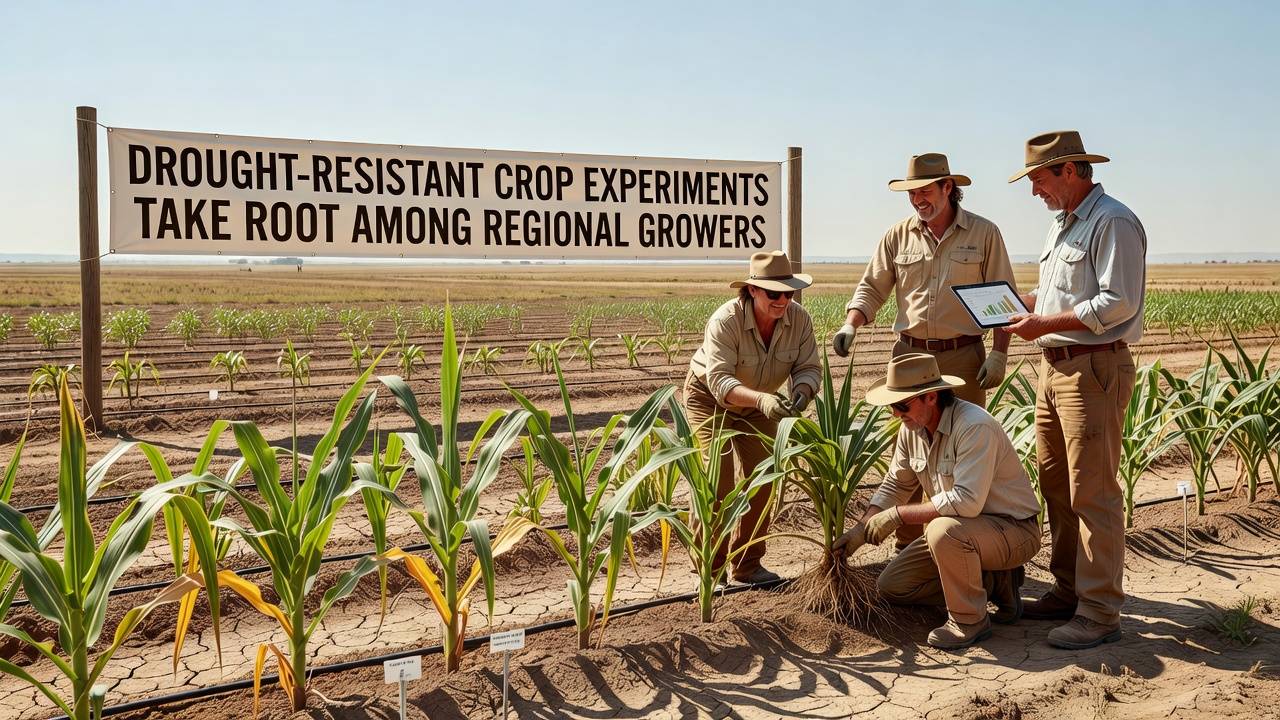
Regional growers have expanded field trials of drought-resistant crop varieties over the past several seasons, and data from multiple agricultural districts shows steady adoption rates as water availability fluctuates. These experiments focus on varieties such as certain sorghum hybrids, pearl millet lines, and selected wheat strains that maintain yields under reduced irrigation, according to reports compiled by university extension services and federal monitoring programs.
Observers note that the shift gained momentum after prolonged dry periods reduced traditional yields in several counties, prompting growers to test alternative seeds through small-plot demonstrations before scaling up. In September 2026, harvest data from ongoing trials will be presented at regional agricultural meetings, where participants expect to review yield metrics alongside soil moisture readings collected throughout the summer months.
Drivers Behind the Experiments
Climate records indicate that average annual precipitation in many growing areas has declined by measurable percentages over the last two decades, while evapotranspiration rates have risen in tandem with higher temperatures. Growers respond by participating in coordinated trials organized through local cooperatives and state agricultural departments, which supply seed stock and track performance across varied soil types. Researchers have documented that these trials often incorporate cover crops and adjusted planting densities to complement the drought-tolerant genetics, creating integrated management approaches rather than relying on single interventions.
Take one cooperative in a semi-arid zone that allocated portions of member fields to side-by-side comparisons of conventional corn against drought-resistant sorghum entries. The resulting datasets revealed that sorghum plots required roughly 30 percent less supplemental water while producing comparable biomass, a pattern repeated across multiple sites according to aggregated findings shared by participating agronomists.
Varieties Under Evaluation
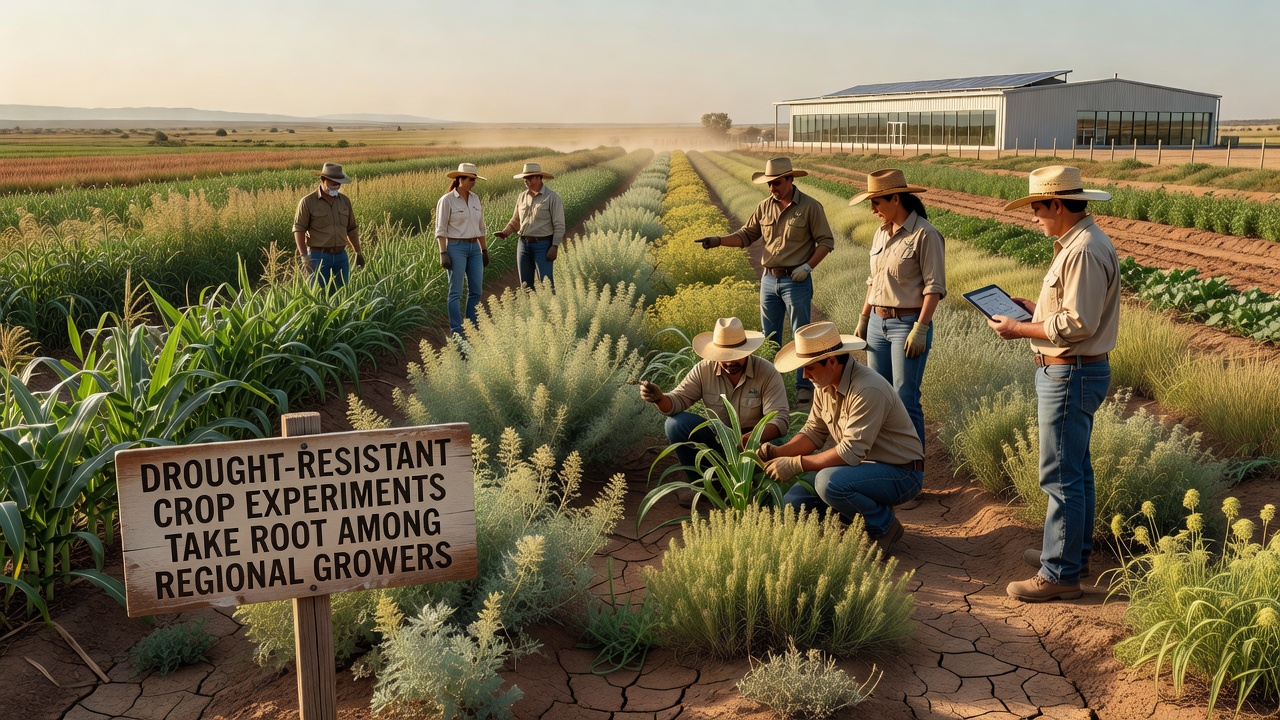
Seed companies and public breeding programs have released lines selected for deeper root systems and improved stomatal regulation, traits that allow plants to extract and conserve moisture more effectively during stress periods. Growers receive these materials through extension networks that also provide training on scouting protocols and harvest timing adjustments specific to each variety. Data collected during the 2025 growing season showed that certain pearl millet accessions retained grain fill even when rainfall fell below long-term averages, prompting additional acreage commitments for the following year.
What's interesting is how these experiments intersect with existing rotation systems. Many operations integrate the new crops into sequences that previously featured only wheat and legumes, thereby spreading risk across both drought tolerance and market diversification. Figures from state crop reports indicate that sorghum acreage in trial districts increased by 12 percent between 2023 and 2025, with projections suggesting continued modest expansion once September 2026 yield summaries become available.
Supporting Research and Data Sources
Academic institutions contribute through multi-year studies that measure not only yield but also water-use efficiency and nutrient uptake under controlled deficit irrigation. One collaborative project involving researchers from several land-grant universities found that selected hybrids maintained photosynthetic rates longer into dry spells compared with standard varieties, results published in peer-reviewed journals and summarized for grower audiences. Government agencies track broader trends through satellite imagery and ground sampling, providing regional overviews that help prioritize which varieties warrant larger-scale testing.
Additional context comes from international programs that have developed similar crops for comparable climates. Growers and researchers reference reports from Australia's Commonwealth Scientific and Industrial Research Organisation on sorghum performance in variable rainfall zones, alongside data released by the United States Department of Agriculture on domestic trial outcomes. These sources supply baseline expectations that local experiments then refine under specific soil and management conditions.
Implementation Challenges and Adjustments
Transitioning to new varieties requires growers to adapt equipment settings, storage practices, and marketing channels because drought-resistant crops often differ in grain characteristics and end-use properties. Cooperatives address these hurdles by hosting demonstration days where participants observe equipment modifications and discuss buyer requirements directly with processors. Soil testing programs have expanded alongside the crop trials, since nutrient management recommendations shift when irrigation volumes decrease and root architectures change.
Yet the ball remains in the growers' court when deciding how quickly to expand beyond initial test plots. Many proceed incrementally, allocating 10 to 20 percent of acreage in the first year and adjusting based on observed performance and input costs. Extension agents report that this measured pace reduces financial exposure while building practical knowledge that later informs larger commitments.
Outlook for Continued Adoption
September 2026 harvest evaluations will supply fresh benchmarks for comparing drought-resistant entries against traditional options under that season's specific weather patterns. Continued monitoring through established networks should clarify which combinations of variety, rotation, and management deliver the most consistent results across variable conditions. Regional agricultural departments plan to update variety recommendation lists once the new data cycles complete, ensuring growers receive guidance grounded in recent local performance.
Conclusion
The expansion of drought-resistant crop experiments reflects coordinated efforts among growers, researchers, and agencies responding to measurable shifts in water availability and yield stability. Ongoing data collection through 2026 and beyond will determine how widely these varieties integrate into standard rotations, with current evidence indicating gradual but sustained interest across participating districts.